AI for small business: where to start without an IT department
You have no developers, no time for experiments and no wish to burn money. This guide is exactly for you: the three automations with the fastest payback and an honest answer to the questions that hold you back.
In a small business the owner is also the salesperson, the accountant and the support desk. That is precisely why AI has the biggest effect there: every hour saved is an hour back for the person who keeps everything running. The good news is that you need neither an IT department nor a big budget to start. All you need is a clear picture of where your time is leaking away.
The first 3 automations with the fastest payback
1. Answering repetitive inquiries
Count how many times this week you have answered “How much does it cost?”, “Are you open on Saturdays?” and “When will it be ready?”. A chatbot on your site or AI drafts in your inbox take on exactly these questions. This is the automation with the fastest visible effect, because inquiries stop waiting on you and stop getting lost.
2. Administrative writing
Quotes, confirmations, product descriptions, social media posts. AI writes the draft in seconds, you add the specifics and check the facts. It is not writing “instead of you” but writing “with you”: the difference is that you start from a text that is 80% done, not from a blank page.
3. Copying data
Invoices into a spreadsheet, orders from email into inventory, contacts from inquiries into a client list. AI reads the document or the message and fills in the fields for you. The boring work you put off until Friday evening simply disappears from the list.
Off-the-shelf tools or a custom solution
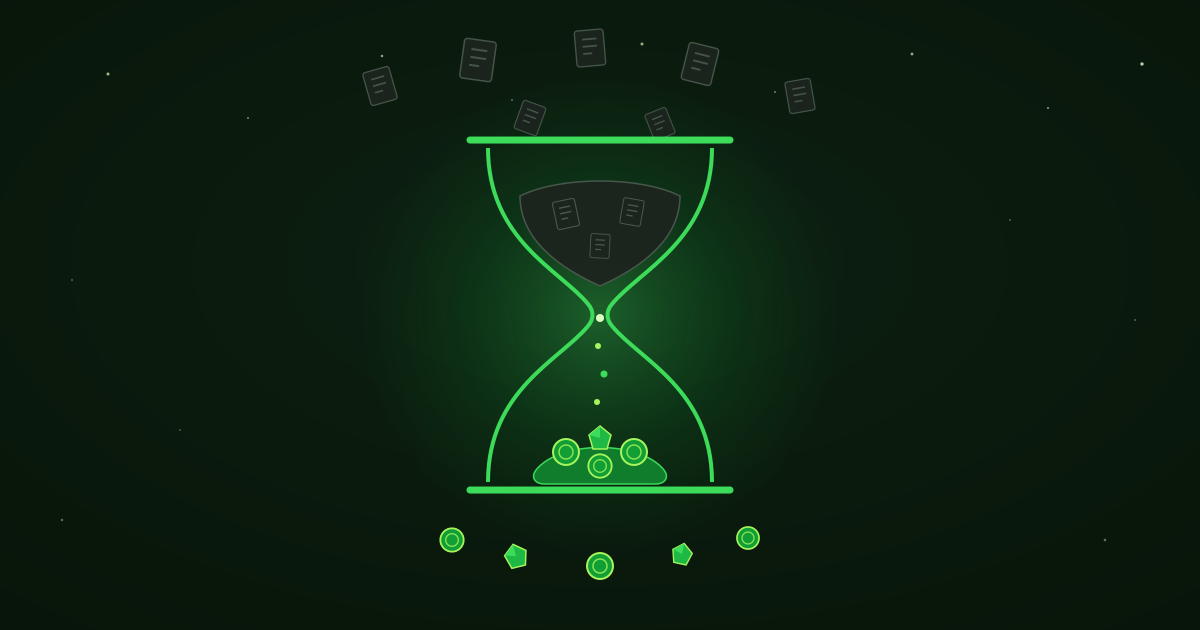
This is the first real decision you have to make, and luckily it is not an “either-or”. Off-the-shelf tools, from ChatGPT and Claude to platforms like Zapier and n8n, are the ideal start: they are cheap, you try them at once and you learn what you actually need. The custom solution comes later, when you hit the limits of the ready-made option: you want the bot to know your prices, the answers to go into your system, the process to follow your rules.
| Criterion | Off-the-shelf tool | Custom solution |
|---|---|---|
| Initial cost | Low: a monthly subscription, often with a free plan | Higher: a one-off build plus maintenance |
| Start | The same day, you set it up yourself | Weeks: analysis, building, testing |
| Fit to your processes | You adapt to the tool | The tool adapts to you |
| Connection to your systems | Only if a ready integration exists | With anything that has an API |
| When it is the right choice | A standard task, small volume, testing an idea | A proven need, large volume, a specific process |
The typical fears and the honest answers
“It’s expensive.” Starting is not. An off-the-shelf tool costs about as much as a few coffees a month. It becomes expensive when a big solution is ordered without it being clear what problem it solves, which is why the order is: first a cheap experiment, then an investment in what has proven its worth.
“It’s complicated, I don’t have time to learn it.” The honest answer: there is a learning curve, but it is days, not months. And if even days are a luxury, that is exactly why there are partners who set everything up and hand you a working process. You run the business, not the technology.
“What happens to my data and my clients’ data?” A legitimate question that deserves more than reassurance. The business plans of serious providers, for example Anthropic, explicitly do not use your data to train the models. With a custom solution you define exactly which data is sent and which never leaves your systems. Ask your provider these questions, and if there is no clear answer, that in itself is an answer.
“AI will make a mistake and embarrass my business.” It can make a mistake, which is why at the start everything passes through your approval: AI proposes, you decide. Only what has come out flawless for months runs fully automatically.
The plan for the first month
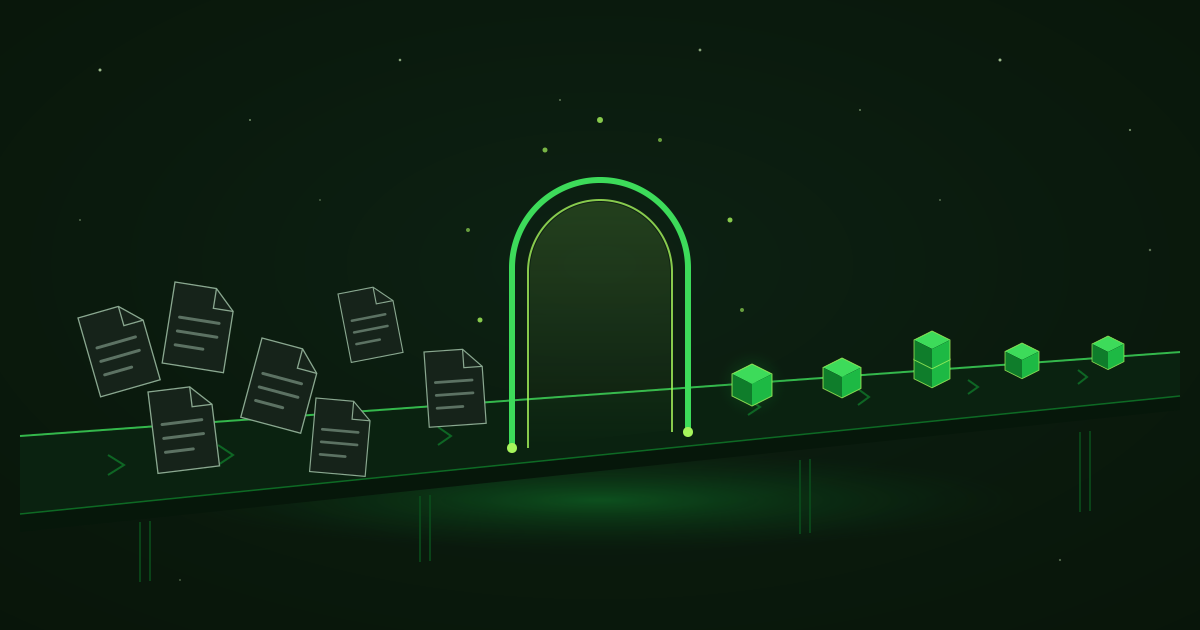
- Week 1: record where your time goes. No tools, just a list.
- Week 2: pick one task from the list: repetitive, predictable, with no big risk if it goes wrong.
- Week 3: try it with an off-the-shelf tool. If it does the job, let it run.
- Week 4: assess: is the ready-made option enough, or do you want it to talk to your systems? Only then think about a custom solution.
You do not need an AI strategy. You need one tedious task fewer every week.
And one last thing: a kingdom does not grow by buying more crowns, but by giving time back to the one who rules it. If you want to take the second step with a partner, see how we work on the AI automation page: we start from your tasks, not from the technology.
Frequently asked questions
Do I need an employee dedicated to AI?
No. Small businesses usually work with an external partner who builds and maintains the automation, or they use off-the-shelf tools that are set up without any programming. All you need is one person on the team who knows the processes and can say what works and what does not.
How much does it cost to start with AI automation?
Off-the-shelf tools start at a few tens of leva a month and you can try them yourself today. Custom solutions cost more, but they are built only when the ready-made option does not cover the need. The sensible path is the cheap experiment first, then the investment.
Is my clients' data safe?
On the business plans of serious providers, your data is not used to train the models, and with custom solutions you define exactly what gets sent, what gets stored and where. The risk is managed like that of any other software: by choosing your provider and setting clear rules.
Isn't AI only for large companies with big budgets?
It used to be, not anymore. Off-the-shelf tools have lowered the entry barrier to a monthly subscription, and a small business often gains more from automation, because there one person wears five hats and every saved hour is felt straight away.
What should I do first, this very week?
For three days, write down where your time goes. Then pick one repetitive task and try to solve it with an off-the-shelf tool. If you hit its limits, you now know exactly what to ask a partner for a custom solution.
Related reading
Which task eats up most of your time?
Tell us and we will answer honestly: whether an off-the-shelf tool is enough, or a custom solution makes sense. We reply within 24 hours.