Local SEO is the discipline that helps a business with a physical presence or local customers show up in Google's local results: the map with the top three positions and the classic results below it. The good news is that most local competitors do almost nothing about it. That means consistent work produces visible results.
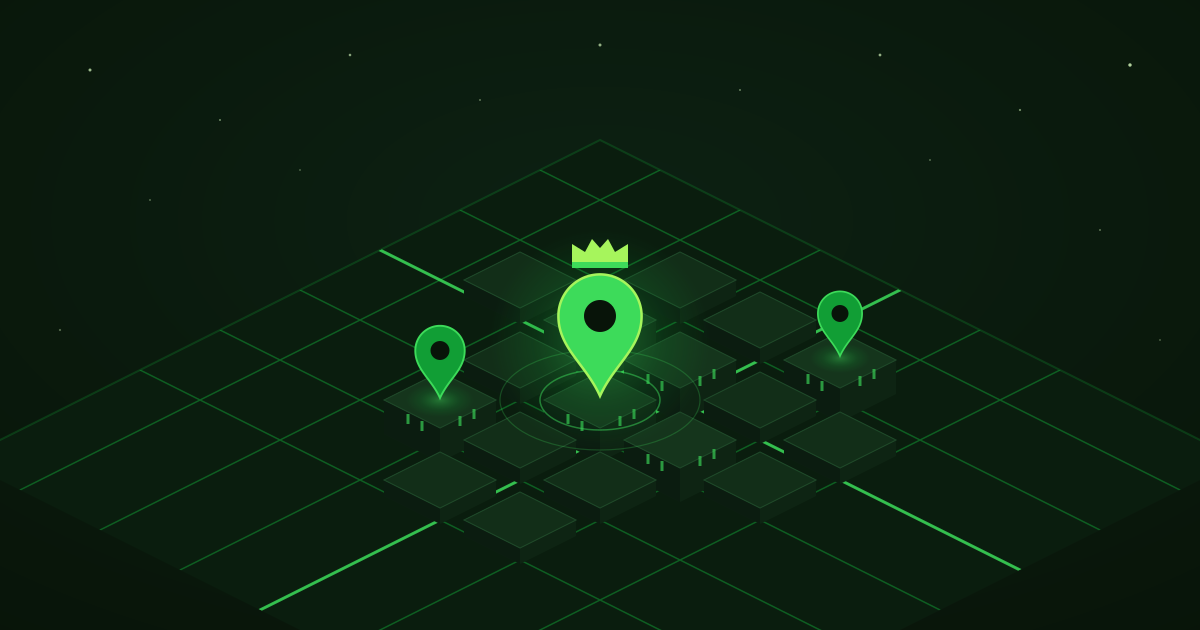
1. Google Business Profile: the foundation of everything
The free business profile on Google is your most important local asset. It determines whether you appear on the map and what the customer sees before they even reach your site.
- Fill in everything: category, description, working hours, phone, address, services, service area.
- Choose the most precise primary category you can. “Family law attorney” is stronger than simply “Attorney”.
- Upload real photos: the location, the team, the products, the results of your work. Profiles with photos attract noticeably more attention than those without.
- Post news and offers through the profile and answer the questions users ask there.
- Keep the working hours current, especially around holidays. The wrong working hours are a sure way to anger a customer.
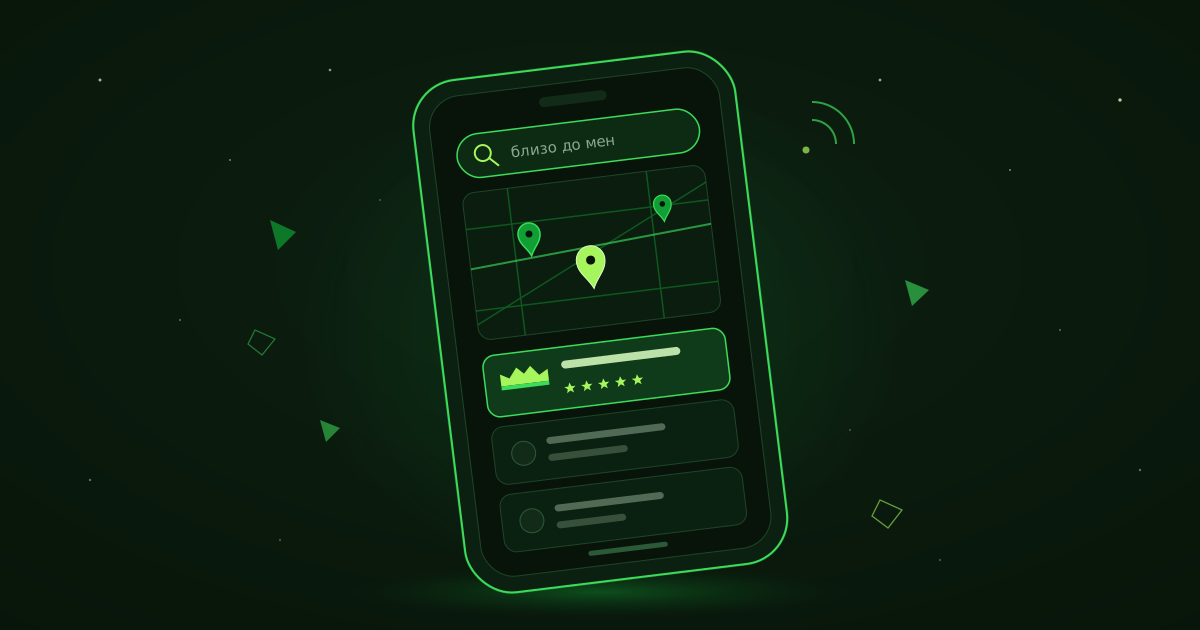
2. Reviews: the social proof that ranks
Reviews influence both the ranking and the customer’s decision. A business with 4.8 stars and 120 reviews wins the click even against a competitor in a higher position.
- Build the habit of asking for a review after every job done well. The easiest way is with a direct link to the review form, sent by SMS, Viber or email.
- Reply to every review, both the good and the bad. A calm, professional reply to a negative review often makes a better impression than ten glowing ones.
- Never buy fake reviews. Google recognises them better and better, and the penalty hits the entire profile.
3. Local keywords on the site
People search by city: “accountant Varna”, “air conditioning installation Sofia”. Your site has to speak the same language.
- Include the city and the service in the title tag, in the h1 heading and in the text of the key pages.
- If you serve several cities or neighbourhoods, make a separate page for each, with unique content rather than a copy with the city name swapped out.
- Think about the questions customers actually ask too: “how much does it cost”, “working hours”, “emergency”. They make ideal topics for a FAQ section.
4. NAP consistency
NAP stands for Name, Address, Phone. Google cross-checks this data everywhere your business is mentioned: site, business profile, directories, social networks. If in one place you are “Studio X Ltd, 5 Ivanov Street” and in another “Studio X, 5A Ivanov Boulevard”, that undermines the algorithm’s trust.
Review all the places where your business appears and make the wording identical down to the comma. Add the details to the site’s footer too, ideally with structured data (schema.org for LocalBusiness), so they are machine-readable.
5. Local content
Content tied to your place is a strong signal that most competitors miss. Ideas that work for almost any business:
- Articles on local topics related to your service: specifics of the area, seasonal tips, local events you take part in.
- Pages with real projects and clients from the area, with concrete detail about what was done.
- Answers to the questions your customers ask most often, mentioning the location where it feels natural.
6. Mobile speed
Local searches are made mostly from a phone, often on the move. A slow site means a closed tab and a customer at the competition. Google also takes speed into account when ranking.
- Test your site with PageSpeed Insights and look at the result for mobile devices, not for desktop.
- The most common culprits are huge images, unnecessary scripts and weak hosting. All three are fixable.
- Make sure the phone number on the site is clickable and that the address leads to navigation. The mobile visitor wants to call or come over, make it easy for them.
In Local SEO it is not the biggest budget that wins, but the most consistent business: a completed profile, regular reviews, current information and a fast site.
Local SEO, paid advertising or classic SEO: which one when
The three approaches do not exclude each other, they complement each other. The difference is in when the result comes, how much it costs and how long it lasts after you stop investing.
| Criterion | Local SEO | Paid advertising | Classic SEO |
|---|---|---|---|
| Time to result | Weeks to a few months | Immediately after the campaign launches | Usually months of consistent work |
| Cost | Low to moderate, mostly labour and consistency | An ongoing budget, you pay for every click | Moderate, a long-term investment in the site and content |
| Durability | High: the profile, the reviews and the positions remain | Low: the traffic stops when the budget stops | High with regular content maintenance |
| Who it is for | Businesses with local customers: clinics, service centres, restaurants, services by area | Quick campaigns, new products, testing demand | Businesses with a national or online audience |
Where to start this very week
If you have to choose only three things: fill in your Google Business Profile to the end, ask for reviews from your most recent satisfied customers and check that your name, address and phone are the same everywhere. These steps alone put most local businesses ahead of their passive competition.
If you want someone to take this over for you, together with the technical side and the content, see our SEO optimisation service and get in touch.
Frequently asked questions
How long does Local SEO take to show results?
The first effects of a completed profile and new reviews are often felt within weeks, while sustained ranking in the local pack usually requires several months of consistent work. The more passive the local competition, the faster the results appear.
Is Google Business Profile free?
Yes, a business profile on Google is completely free. It only costs time: filling in all the information, uploading real photos and keeping the working hours, services and posts up to date.
What is the local pack in Google?
The local pack is the block with the map and the three local businesses that Google shows above the classic results for searches with local intent, for example a service plus a city or "near me". Getting into that trio brings the most calls and visits.
Can I do Local SEO myself?
The basics are entirely within reach: a profile filled in to the end, the habit of asking for reviews and the same name, address and phone everywhere. Technical optimisation, site speed and local content take more time and experience and are often handed over to a specialist.
Does Local SEO help if I have no physical location?
Yes. Google Business Profile supports service-area businesses: you list the areas you cover without showing an address. The rest of the steps, reviews, local keywords and local content, work in exactly the same way.
Related reading
It is time Google found you first.
Tell us about your business and your area and we will offer you an SEO plan with clear steps and a price. We reply within 24 hours.